By Jon Selvaraj, co-founder of Vista TechWerx and builder of BidWERX. Last updated August 2026.
Quick answer: SBIR is one program, but agencies fund it two ways. Some award SBIR as grants (assistance, funding your proposed research), and others award it as contracts (procurement, buying research the agency defined). "SBIR funding" covers both. The difference is not cosmetic: it changes who sets the topic, how prescriptive the work is, and how you are managed after award. Which one you are pursuing depends entirely on the awarding agency's solicitation.
Key takeaways
- SBIR is a single federal program, but participating agencies award it as either a grant or a contract. Both are "SBIR funding."
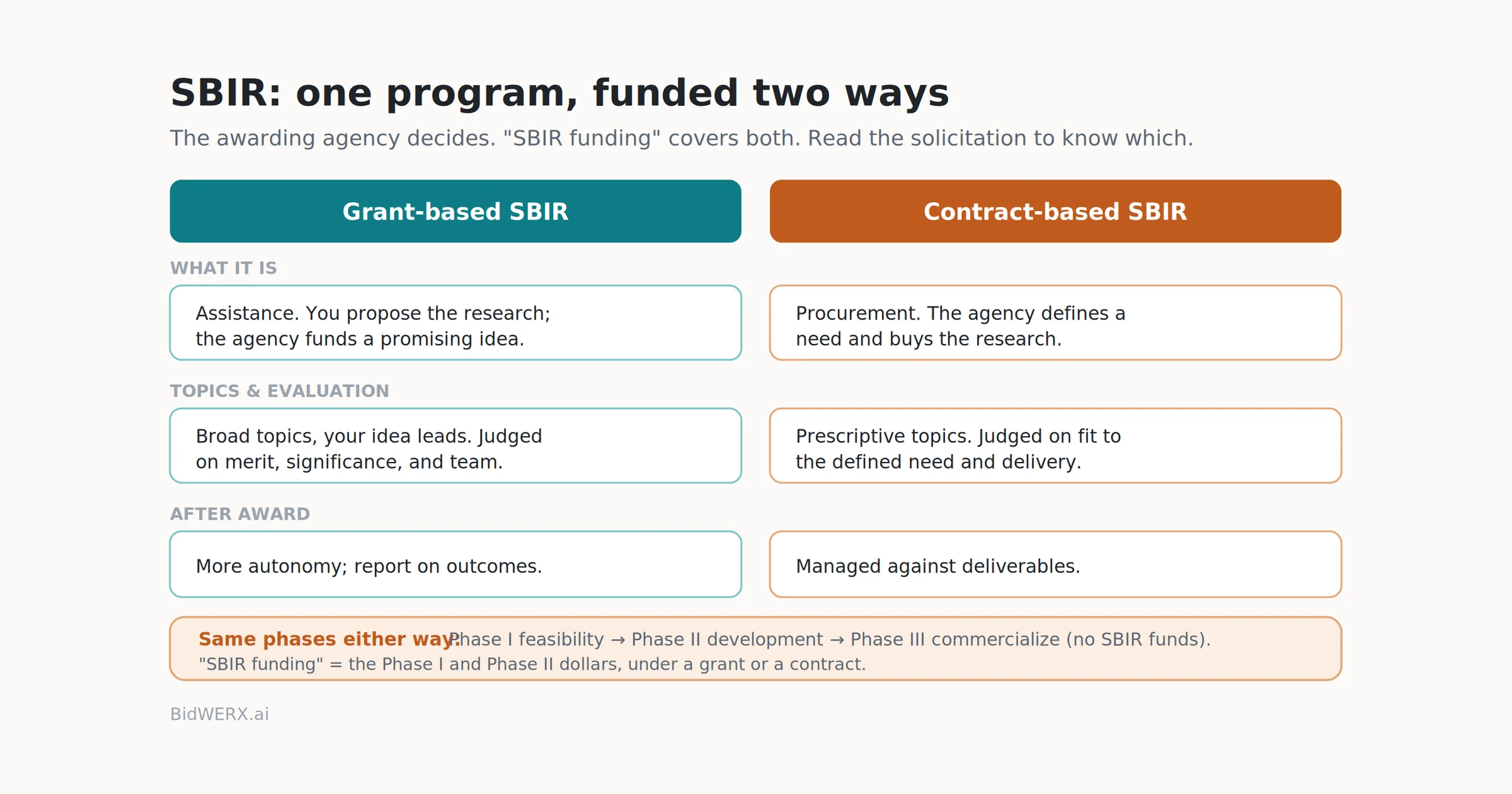
- Grant-based SBIR is assistance: you propose the research, and the agency funds a promising idea. Contract-based SBIR is procurement: the agency defines a need and buys the research.
- The mechanism changes how prescriptive the topic is, how you are managed, and reporting expectations, so read the solicitation to know which you are in.
- Across both, the phase structure is the same: Phase I proves feasibility, Phase II develops it, Phase III commercializes with no SBIR funds.
If you have searched "SBIR grants" and "SBIR contracts" and come away confused about which one SBIR actually is, the answer is that it is both, depending on who is funding it. SBIR (the Small Business Innovation Research program) is one government-wide program, but the agencies that participate choose how to award it. Getting this straight matters, because it changes how you write, what you can propose, and how the work runs after you win.
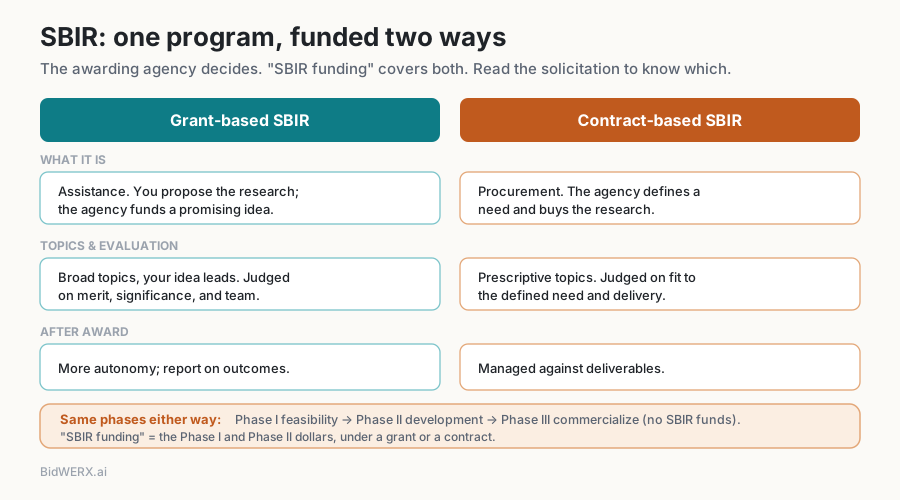
SBIR is one program, funded two ways
SBIR is a single federal program with a shared purpose: fund small businesses to do research and development with commercial potential. But it is not run by one office. Multiple agencies participate, and each decides whether to award its SBIR money as a grant or as a contract. That single choice by the awarding agency is why the program looks different depending on where you apply.
The rule of thumb is straightforward. Agencies whose mission is to advance science and health tend to award SBIR as grants, funding research a company proposes. Agencies whose mission is to buy capabilities for their own use tend to award SBIR as contracts, procuring research they have scoped. Neither is better. They are different instruments for different situations, and the solicitation tells you which one you are looking at.
Grant-based SBIR: assistance for research you propose
When SBIR is awarded as a grant, it is assistance. The agency publishes broad topic areas, and you propose the specific research you want to pursue within them. The center of gravity is your idea: is it significant, is the approach sound, is your team capable, and does it have a credible path to commercialization. You have more latitude to define the work, and after award you generally have more autonomy to run the project, in exchange for reporting on progress and outcomes.
If your innovation is something you are driving and you want room to shape the research direction, grant-based SBIR fits that posture. You are being funded because your idea is promising, not because an agency has already decided exactly what it needs.
Contract-based SBIR: procurement of research the agency defined
When SBIR is awarded as a contract, it is procurement. The agency defines specific topics tied to a real need it has, sometimes quite precisely, and buys the research to meet it. The center of gravity shifts toward the agency's requirement: how well your approach addresses the defined problem, and how credibly you can deliver it. The topics are more prescriptive, and after award you are managed more like any contractor, against deliverables and a schedule.
If you want to align your research to a specific agency need and a clearer downstream customer, contract-based SBIR fits that. You are being bought because your approach solves a problem the agency already knows it has.
Why the difference actually matters
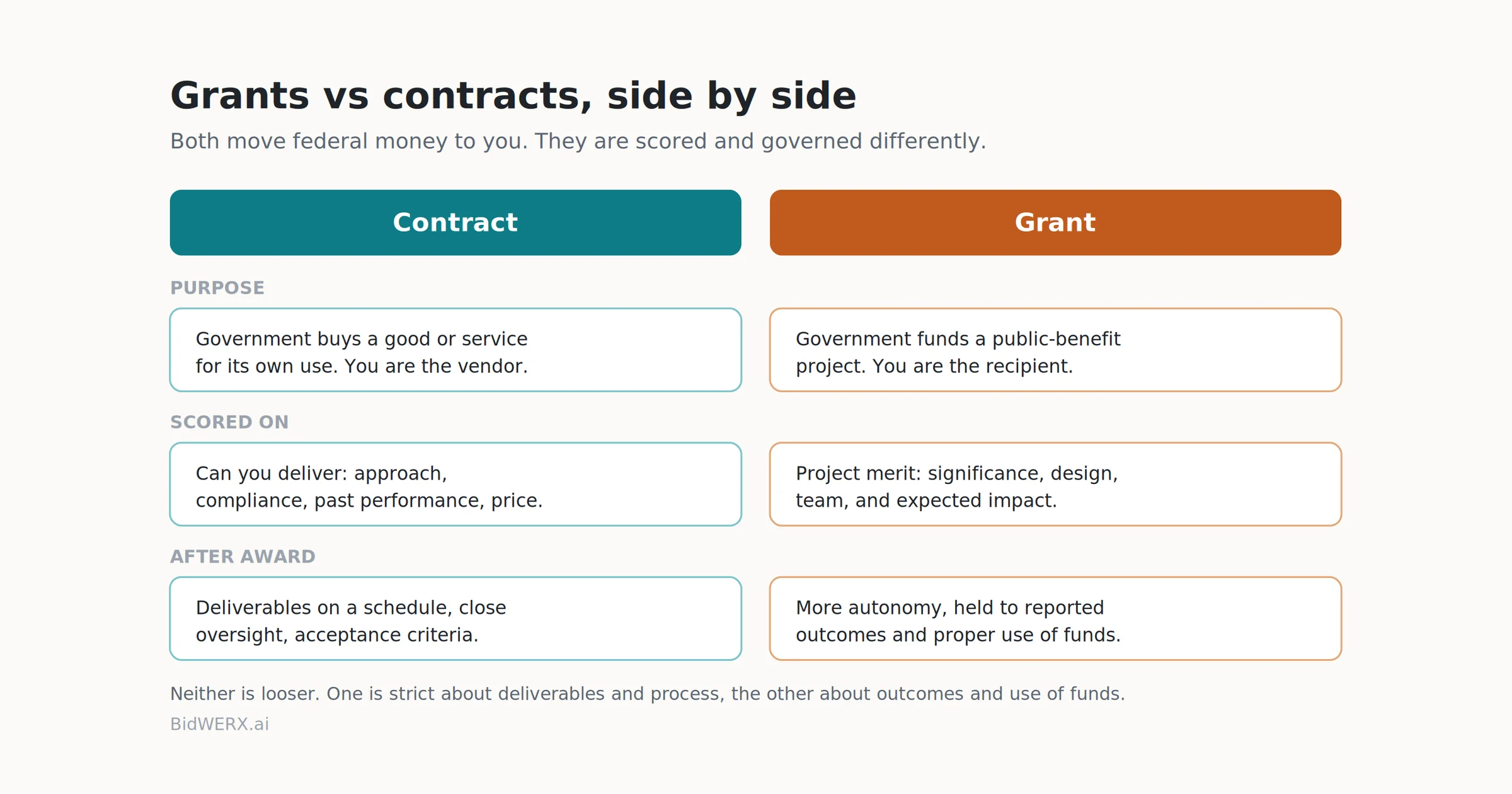
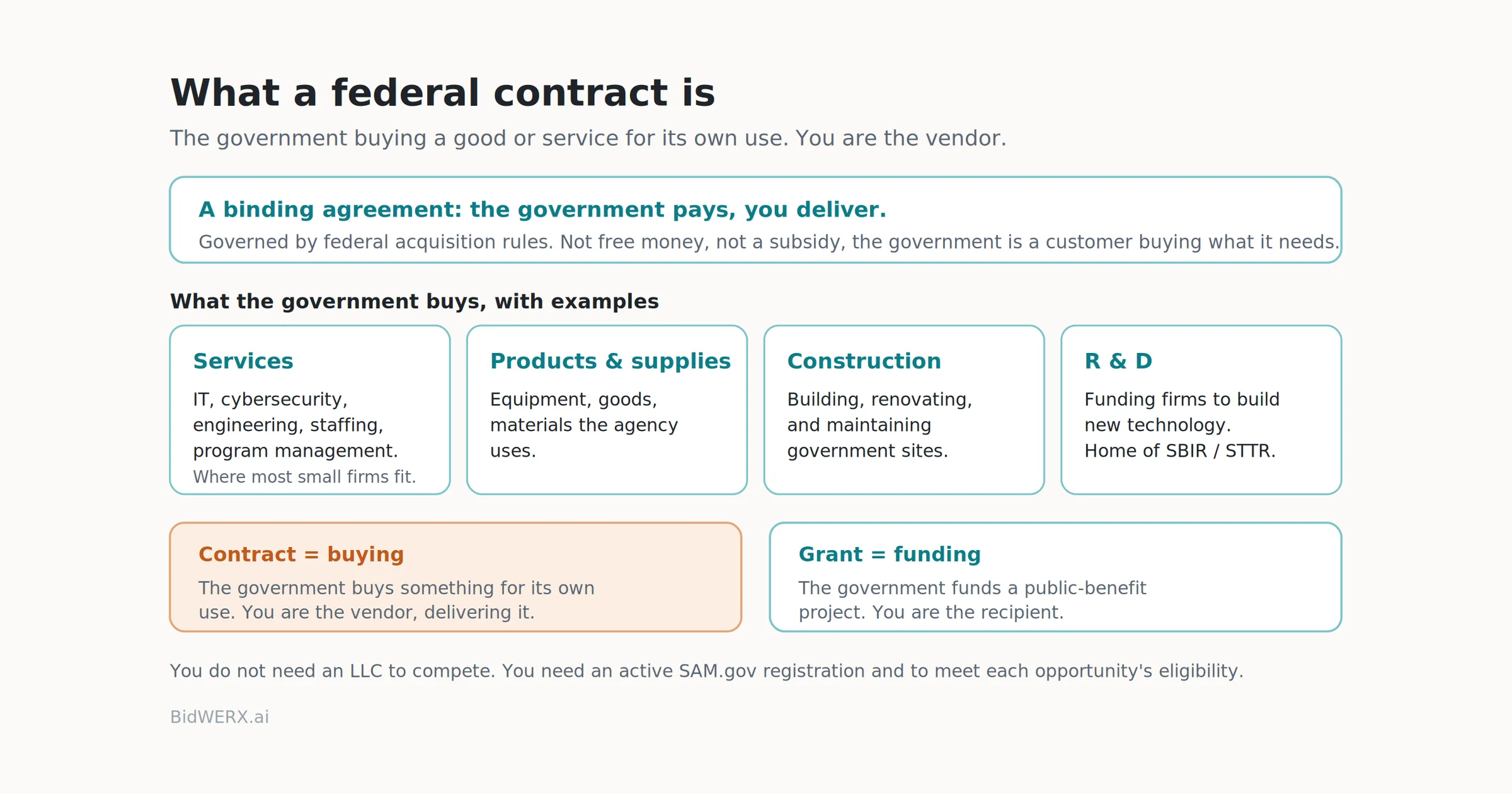
The mechanism changes real things. It changes how much freedom you have to define the work, prescriptive under a contract, more open under a grant. It changes how you are evaluated, project merit and significance under a grant, responsiveness to a defined requirement under a contract. It changes how you are managed after award, more autonomy under a grant, more deliverable oversight under a contract. And it shapes your commercialization story, because a contract-based topic often comes with a clearer path to a follow-on customer. Reading which instrument a solicitation uses, before you write, tells you which register to write in. This is the same buying-versus-funding distinction that separates federal contracts from grants generally, applied inside one program.
What stays the same: the phases
Whichever way it is funded, SBIR runs the same three-phase structure. Phase I proves feasibility with a smaller, shorter award. Phase II develops the technology with a larger, longer award, generally open only to Phase I awardees on the same topic. And Phase III is commercialization, which deliberately uses no SBIR funds and moves you to market on other money, whether a follow-on contract or commercial sales. So "SBIR funding" refers to Phase I and Phase II dollars, under either a grant or a contract, and the goal in both is to reach a self-sustaining Phase III.
Figuring out which one fits your firm
The instrument is set by the agency, but which SBIR opportunities are worth your time is a fit question, and it is the harder one. A specific topic either matches your technology, your team, and your commercialization path, or it does not, and the register (grant or contract) shapes how you should respond. BidWERX Evaluate structures a readiness check on the response you would submit, against the criteria the solicitation sets. For contract-based SBIR and STTR opportunities on SAM.gov, FitScore adds a relative read on how well the opportunity fits your firm. Evaluate assesses your readiness rather than writing the proposal, and FitScore is a relative fit indicator to help you prioritize, not a prediction that you will be awarded. If you want to weigh a specific SBIR opportunity against your firm, you can start a free BidWERX trial.
Jon Selvaraj is the co-founder of Vista TechWerx and the builder of BidWERX, a readiness and decision tool for small firms pursuing federal work. He writes about the operating discipline behind winning government business.
Related reading: SBIR vs STTR: which fits, and how the phases work · grants vs contracts: how the scoring and expectations differ.
Frequently Asked Questions
Is SBIR a grant or a contract?
Both, depending on the awarding agency. SBIR is one federal program, but participating agencies choose how to award it. Some award it as grants (funding research you propose), and others as contracts (procuring research they have defined). "SBIR funding" covers both. The solicitation you are responding to tells you which instrument that agency uses.
What is the difference between an SBIR grant and an SBIR contract?
A grant-based SBIR is assistance: you propose the research and are funded because the idea is promising, with more latitude and autonomy. A contract-based SBIR is procurement: the agency defines the topic and buys the research, with more prescriptive requirements and deliverable oversight. The difference changes how you write, how you are evaluated, and how the project is managed.
What does "SBIR funding" mean?
SBIR funding is the money awarded through the Small Business Innovation Research program to help small firms do research and development with commercial potential. It refers to Phase I (feasibility) and Phase II (development) awards, which an agency may issue as either a grant or a contract. Phase III, the commercialization stage, deliberately uses no SBIR funds.
Which agencies award SBIR as grants versus contracts?
As a general pattern, agencies focused on advancing science and health tend to award SBIR as grants, while agencies that buy capabilities for their own mission tend to award it as contracts. There are exceptions, so do not assume. The specific solicitation always states the instrument, the topics, and the rules that apply, so read it before you decide how to respond.