By Jon Selvaraj, co-founder of Vista TechWerx and builder of BidWERX. Last updated August 2026.
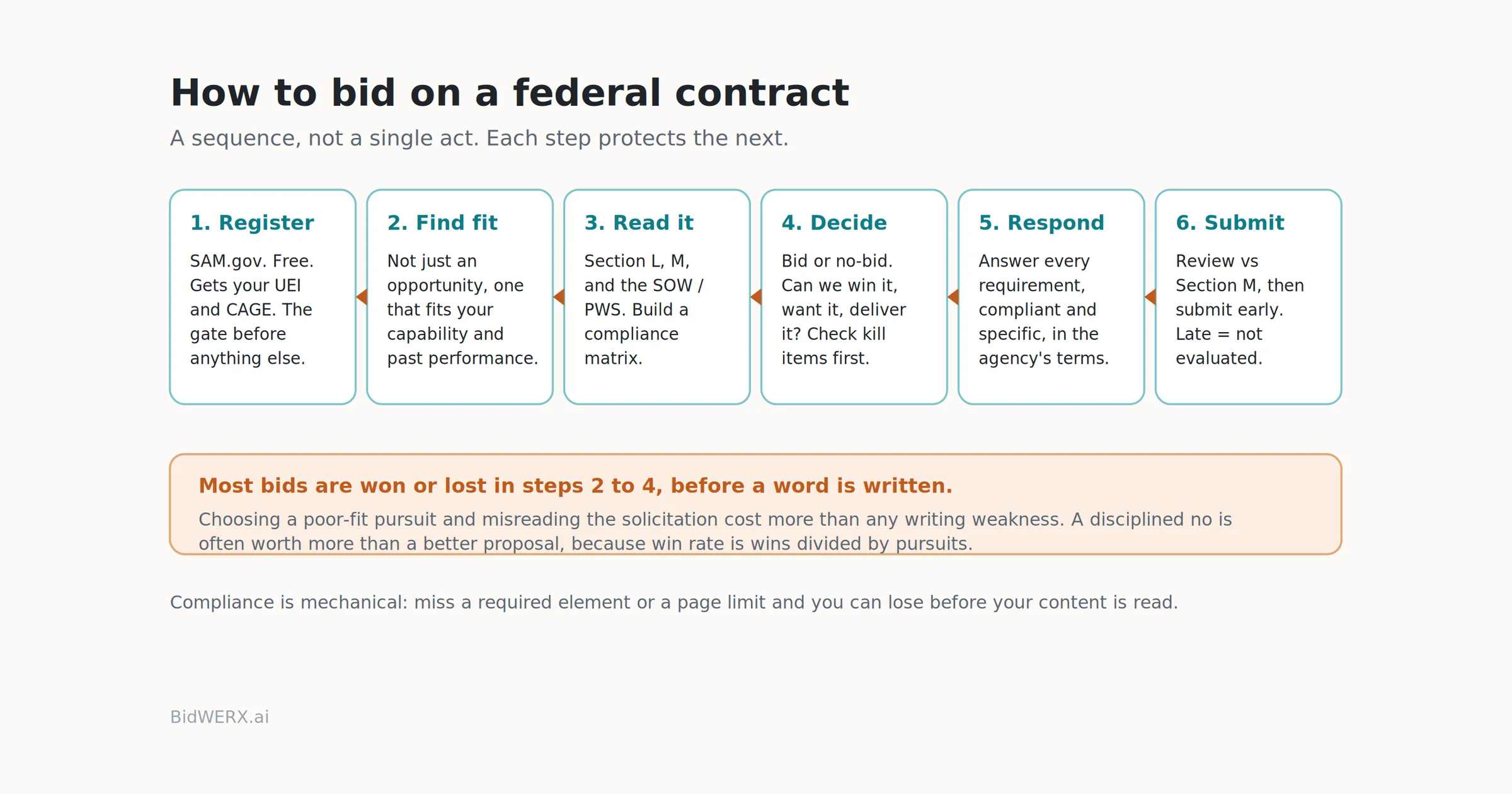
Quick answer: To bid on a federal contract, register in SAM.gov, find an opportunity that fits your firm, read the solicitation closely (Sections L, M, and the SOW or PWS), decide honestly whether to bid, build a compliant response that answers every requirement, and submit before the deadline. The order matters. Most losses happen before a word is written, in choosing the wrong pursuit or misreading what the solicitation asked for.
Key takeaways
- Bidding is a sequence, not a single act. Register, find fit, read, decide, respond, submit, and each step protects the next.
- The bid/no-bid decision is the highest-payoff step. Saying no to the wrong pursuit is often worth more than any proposal edit.
- Compliance is mechanical and unforgiving. Miss a required element or a page limit and you can lose before your content is read.
- You do not need a large team to bid well. You need discipline about which opportunities you chase and rigor about answering exactly what was asked.
The word "bidding" makes it sound like a single moment, the submission. In practice it is a chain of steps, and the firms that win are not the ones with the flashiest proposals. They are the ones who chose the right opportunity and answered exactly what the government asked. Here is the whole path, in order, with the places firms most often go wrong.
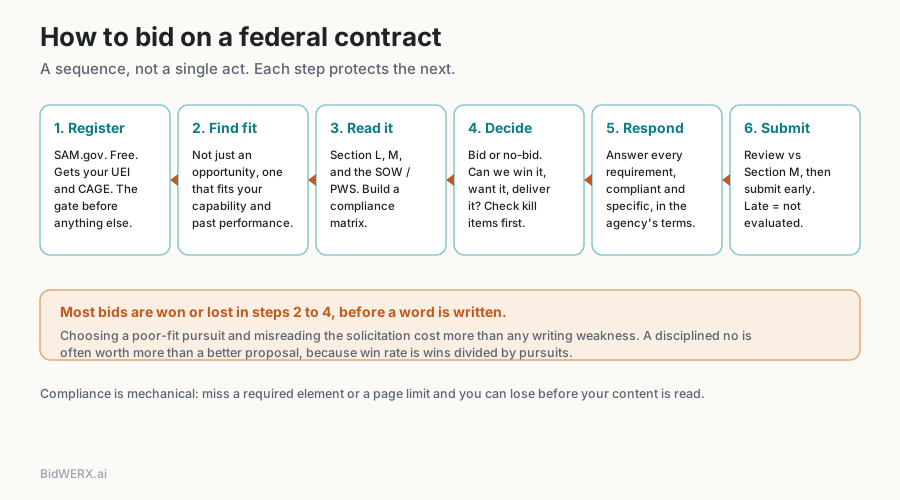
Step 1: Register in SAM.gov
You cannot be awarded a federal contract without an active SAM.gov registration, so this is the gate before anything else. Registration is free, it issues your Unique Entity ID and CAGE code, and it establishes your NAICS codes and any size or set-aside status. Do this before you find an opportunity, because validation can take a week or two, and you do not want to discover a lapsed registration the week a good solicitation drops.
Step 2: Find an opportunity that fits
Search SAM.gov Contract Opportunities for active solicitations, filtered to your NAICS codes and the set-asides you qualify for. The goal at this stage is not to find an opportunity, it is to find one that genuinely fits your firm: your capability, your past performance, your capacity. Chasing a poor-fit opportunity is the most expensive mistake in this whole process, because it costs you the pursuit you could have run instead. Fit is the filter that makes everything downstream worthwhile.
Step 3: Read the solicitation closely
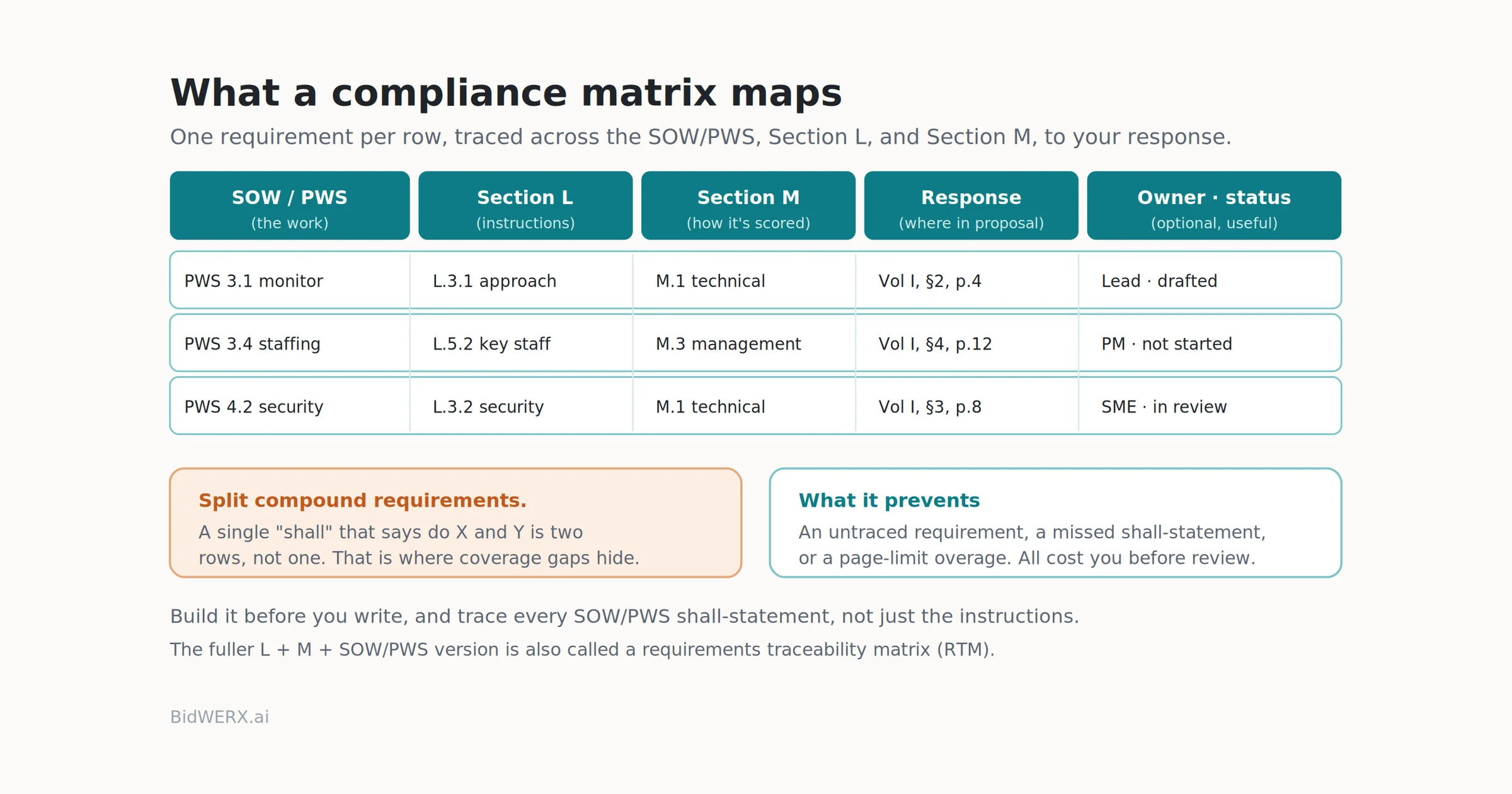
When you find a fit, read the solicitation like it will be on a test, because effectively it will. Three parts drive your response. Section L tells you how to prepare and organize your proposal, including format and page limits. Section M tells you how the government will score it. And the SOW or PWS (often flowing from Section C) is the actual work, the tasks and shall-statements you must perform. Build a compliance matrix that crosswalks these, one row per requirement, so every instruction, evaluation factor, and shall-statement is traced to a place in your response. This is the single most protective habit in proposal work.
Step 4: Make an honest bid/no-bid decision
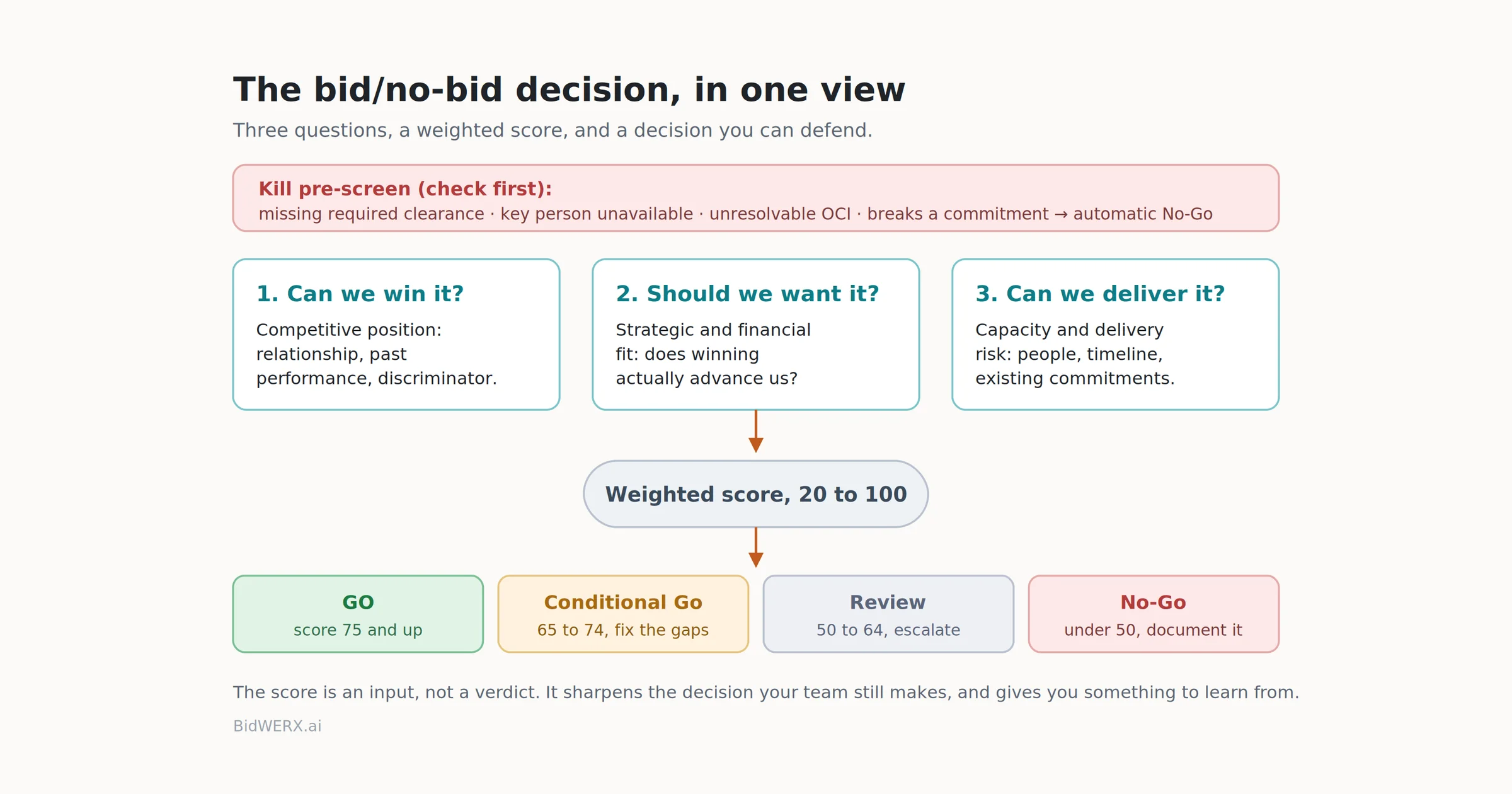
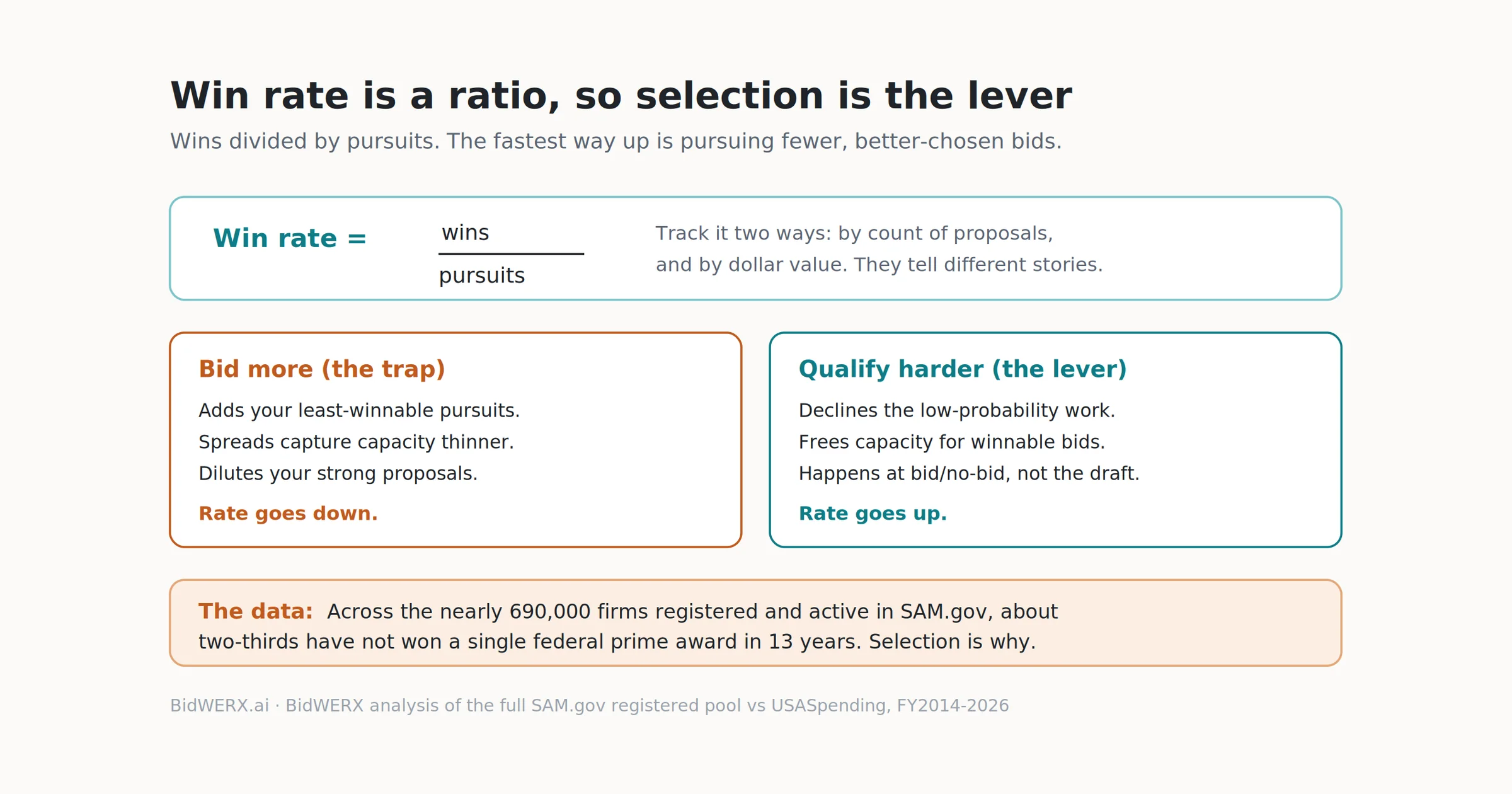
Before you commit real money to a proposal, decide whether you should. This is the highest-payoff step and the one most firms skip. Ask three questions honestly: can we win it (competitive position), should we want it (strategic and financial fit), and can we deliver it (capacity and risk). Check the kill items first, a missing required clearance or an unavailable key person ends the decision on its own. A disciplined no here frees your limited capacity for a pursuit you can actually win. Your win rate is wins divided by pursuits, so pursuing fewer, better-chosen opportunities is the fastest way to raise it.
Step 5: Build a compliant, responsive proposal
Now you write, guided by the compliance matrix. Answer every requirement in the government's terms, not yours. Be specific: a vague approach reads as generic and scores low. Follow Section L exactly, respect every page limit, and make sure your response is responsive (it addresses the requirement), compliant (it follows the instructions), persuasive (it gives a real reason to choose you), and credible on delivery risk. Those are the four things evaluators reward, and a proposal that nails all four is competitive whatever the agency.
Step 6: Review, then submit before the deadline
Before it goes out, read your proposal once as a skeptical evaluator would, scoring it against Section M and nothing else. Confirm every compliance-matrix row points to a real, complete location in the response, and that no volume blew its page limit. Then submit through the method the solicitation requires, well before the deadline, because federal deadlines are hard and a late proposal is simply not evaluated, no matter how good it is.
Where firms lose, and how to tighten each step
Notice that most of the failure points are not the writing. They are choosing a poor-fit pursuit, misreading the solicitation, and mechanical compliance slips. That is exactly where BidWERX is built to help. Find and FitScore surface the opportunities that fit your firm, so step 2 starts from strength. The Go/No-Go framework structures step 4 into a repeatable, defensible decision instead of a hallway gut call. And Evaluate runs your draft through a readiness check across the four dimensions evaluators reward, returning an overall Grade and where the gaps are, so you fix them before you submit. To be clear about what each does: FitScore is a relative fit indicator, the Go/No-Go score is an internal decision aid, and the Grade is a relative, internal readiness measure. None of them predicts the award, and BidWERX evaluates your readiness rather than writing the proposal for you. If you want to run your next opportunity through find, decide, and evaluate in one place, you can start a free BidWERX trial.
Jon Selvaraj is the co-founder of Vista TechWerx and the builder of BidWERX, a readiness and decision tool for small firms pursuing federal work. He writes about the operating discipline behind winning government business.
Related reading: the bid/no-bid decision: three questions before you write a word · how to build a compliance matrix.
Frequently Asked Questions
How do you bid on a federal contract?
Register in SAM.gov, find an opportunity that fits your firm, read the solicitation closely (Sections L and M and the SOW or PWS), make an honest bid/no-bid decision, build a compliant response that answers every requirement, review it against the evaluation criteria, and submit before the deadline. The sequence matters, since each step protects the ones after it.
Do I have to be registered before I can bid?
Yes. An active SAM.gov registration is required before the government can award you a contract, and it takes time to validate, often a week or two. Register before you find an opportunity so a pending or lapsed registration does not cost you a live solicitation. Registration is free and issues your Unique Entity ID and CAGE code.
What is the most common reason firms lose federal bids?
Most losses trace to choosing a poor-fit pursuit or misreading the solicitation, not to weak writing. A firm that bids everything spreads itself thin and answers requirements loosely. Disciplined opportunity selection and a compliance matrix that traces every requirement to a response prevent the two most common failures: pursuing the wrong work and leaving requirements unanswered.
How long does it take to prepare a federal proposal?
It varies widely by the size and complexity of the solicitation, from days for a small task order to many weeks for a large one. What matters more than raw time is starting early enough to build a compliance matrix, make a real bid/no-bid decision, and leave room for an internal review before the deadline. Rushed proposals miss requirements that a matrix would have caught.